More than 40 scientists and experts from Moldova, China and the United States gathered in Chișinău and Bălți, Moldova, from September 1 to 5, 2026, for the Moldova–China Forum on Black Soil Farming and related activities. Under the theme “Sustainability of Black Soil Farming,” the event focused on soil conservation, sustainable farming practices and crop improvement.
Participants adopted and signed a declaration on conserving black soils in both countries. Building on an existing cooperation framework agreement between the ANSO-World Mollisols Association (ANSO-WMA) and Moldova’s National Center for Research and Seed Production (NCRSP), the two sides agreed to share long-term experimental data, support exchanges of early-career researchers, prepare joint publications and develop collaborative project proposals.
The forum was jointly organized by the Academy of Sciences of Moldova (ASM), ANSO-WMA, NCRSP and the Northeast Institute of Geography and Agroecology (IGA) of the Chinese Academy of Sciences (CAS). Co-organizers were the Society of Mollisols Resources Conservation and Utilization of Heilongjiang Province, the Heilongjiang Provincial Engineering Center for Soil and Water Conservation, and Alecu Russo Bălți State University.
ASM President Ion Tiginyanu chaired the opening ceremony in Chișinău. Wang Lyuxin, counsellor and chargé d’affaires ad interim of the Chinese Embassy in Moldova, addressed the meeting. Rattan Lal of The Ohio State University, the 2020 World Food Prize laureate, joined online. ASM also awarded ANSO-WMA President Xiaobing Liu a Diploma of Honor for his scientific achievements and contributions to scientific and technological cooperation between the two countries.
Twenty-three researchers gave presentations during a day of scientific sessions covering black soil formation and fertility, soil degradation and health, conservation agriculture and sustainability, and crop breeding and productivity.
Moldovan scientists examined threats to the country’s Chernozems, including organic matter loss, erosion, compaction and climate change. They discussed cover crops, crop rotation, reduced tillage and no-tillage systems, as well as agroforestry and silvopastoral approaches to restoring soils and storing carbon. Speakers also highlighted the role of soil microorganisms and the need for long-term monitoring to guide locally adapted restoration practices.
Chinese scientists presented research on the formation, classification and age of black soils in Northeast China, including the role of microbial communities. Long-term studies explored how tillage, crop rotation and fertilization affect soil fertility, organic matter and biodiversity. Other presentations addressed biodegradable microplastics and soil carbon cycling, the restoration of eroded soils, and strip tillage in cool-climate regions.
Researchers from both countries reviewed progress in soybean breeding and discussed ways to improve stress tolerance and yield stability in non-genetically modified soybean production. They also examined the relationship between soil organic matter and crop productivity.
At NCRSP in Bălți, the Chinese delegation visited long-term experiments on crop rotation, continuous cropping and conservation agriculture. Discussions focused on how crop residue retention, cover crops, tillage intensity and fertilization influence soil structure, water retention, organic matter and yields. Participants examined a Chernozem profile to assess soil horizon development and the effects of long-term cultivation on its humus-rich layer.
The delegation also visited a soybean breeding site, where researchers assessed the adaptability, root development, nodulation and yield potential of varieties and breeding lines. Bălți Mayor Alexandru Petcov received the delegation during the visit.
The event was supported by the CAS International Partnership Program project “Mechanism and Control of World Mollisols Degradation” (131323KYSB20210004), the ANSO-World Mollisols Association project (ANSO-PA-2023-12), the European TRAILS4SOIL project, UCIP IFAD, Donau Soja’s Moldova office, the Chamber of Commerce and Industry of the Republic of Moldova, and Pro-Co-Re Bălți.
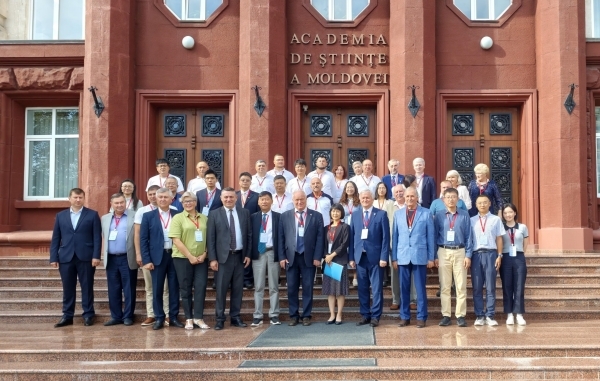
Figure 1. Forum participants at the Academy of Sciences of Moldova in Chișinău.
(Image by HU Xiaojing)
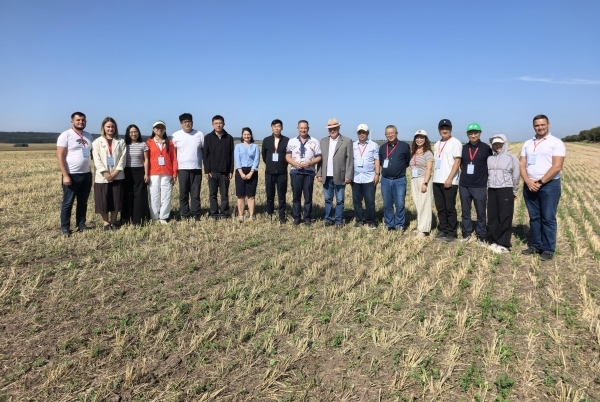
Figure 2. Researchers visit long-term field experiments at the National Center for Research and Seed Production in Bălți.
(Image by HU Xiaojing)
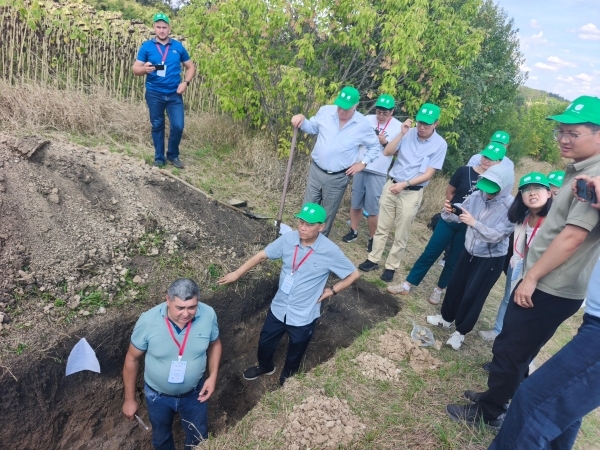
Figure 3. Participants examine a Chernozem soil profile during the field visit.
(Image by HU Xiaojing)
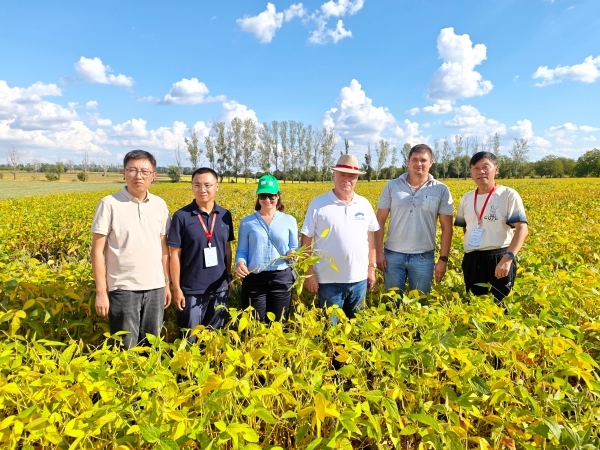
Figure 4. Researchers visit a soybean breeding site in Moldova.
(Image by HU Xiaojing)
Contact:
Xiaojing Hu
Northeast Institute of Geography and Agroecology, Chinese Academy of Sciences
E-mail: huxiaojing@iga.ac.cn


